


Sprunki Playground: Sandbox
4.13.00 Reviews
App Specs
- Version
- 1.1
- Updated On
- License
- Free
- Downloads
- 100,000+
- Developer
- Logic Apz
- Categories
- Simulation
- Platform
- Android
Screenshots
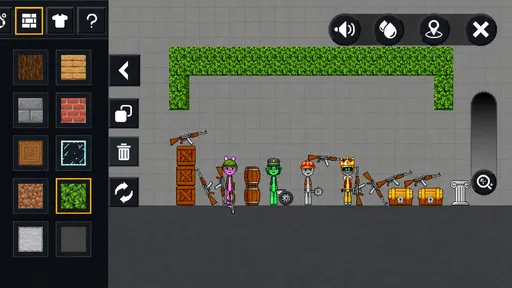
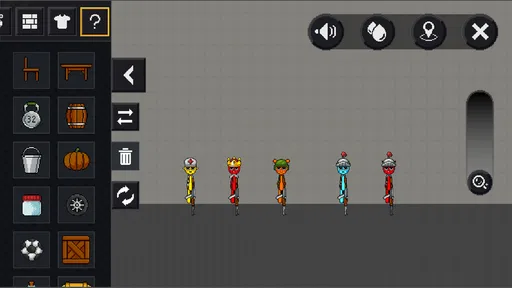
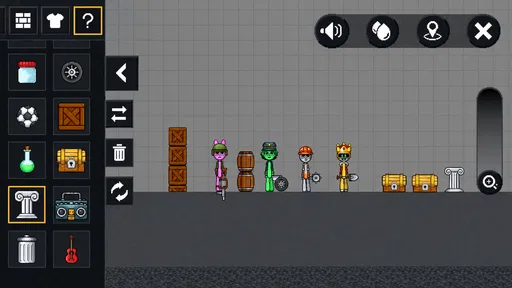
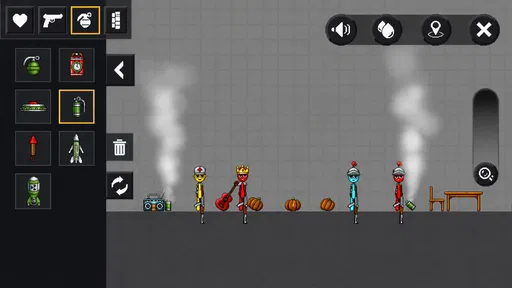
 Analysis by AppCompare
What makes Sprunki Playground: Sandbox interesting to me is its focus on open-ended play: instead of framing the experience around a clearly defined objective, it invites you to create, mix, and experiment with Sprunki in a sandbox. That changes the appeal. I’d approach it as a small creative diversion, not as a simulation that promises a detailed world to manage or a campaign to finish.
That distinction matters if you are deciding whether to download it. Some simulation games reward careful planning, upgrades, and long sessions. This one is positioned around playful experimentation, which can suit a short break or a shared moment with a child better than a checklist-heavy game. My main reservation is that a sandbox’s enjoyment depends on how much room it gives your imagination; players who want explicit goals may find the open format less satisfying.
Play built around experimentation
I find the appeal of a sandbox like this is how it shifts the work of play to me: rather than waiting for a goal, I bring a small idea and see where it goes. That makes experimentation feel more personal, but it also means a little intention can help. The next section looks at a simple way to approach that freedom without expecting a particular feature or outcome.
A sandbox rather than a conventional simulator
In a traditional simulation, I expect a clear loop: build something, manage resources, or improve a system over time. The idea here is different. The central attraction is getting to play around with Sprunki in a creative setting. That makes the game easier to dip into, because you do not have to remember a complicated objective before you start.
It also means the experience is best judged by the freedom it offers, rather than by how quickly it hands out rewards. If you enjoy trying combinations and seeing what happens, the premise has a natural appeal. If you need missions, unlocks, or a steady sense of progress to stay engaged, an objective-led building or management sim is likely a safer choice.
I’d keep expectations appropriately grounded: the concept supports imaginative play, but it does not by itself guarantee deep customization or a large set of activities. The practical question is whether the available interactions feel satisfying enough to revisit. For a casual game, a few minutes of amusing experimentation can be a perfectly good session; it does not need to become a long-term project.
What “mix and play” means for a session
The useful way to approach a creative sandbox is to treat each session as a small experiment. Rather than trying to invent an elaborate scenario immediately, start with one simple idea: place or combine things in a way that makes sense to you, observe the result, and then change one part. That keeps the play understandable and makes it easier to notice what you enjoy.
Worth Reading Before You Choose

Flipboard Shows What News Apps Must Do Beyond the Feed

Switching to Android Auto Means Rethinking Your Driving Routine

Google Calendar Makes a Crowded Week Easier to Manage

Ludo King Makes the Most of the Minutes Between Plans

Baby Panda World Brings Quick Play to Modern Phones, but Its Game Library Feels Busy

ESPN’s Live Game View Makes Following Close Games Easier
This is a practical tip, not a promise of a particular hidden mechanic. The appeal of the game’s premise is the freedom to create and mix, so a one-change-at-a-time approach helps you get more from that freedom without turning the session into random tapping. It also gives younger players an easy way to invent their own rules: “What if this goes here?” is often enough to get a story started.
Another useful habit is to decide what you want from the session before opening the game. A quick, silly experiment works well when you have a few spare minutes; a more deliberate scene is better when you can give it attention. Because the draw is self-directed play rather than a clearly stated finish line, stopping when the idea has run its course feels natural.
Where it fits into everyday life
A realistic use case is a quiet break while waiting for an appointment or winding down at home. I would open it with the goal of trying one playful arrangement, not with the expectation that I need to complete a level. That makes the game easier to enjoy in short bursts and avoids the frustration of leaving a long task unfinished.
It may also work as a simple prompt for playing alongside a child. One person can suggest a character or arrangement, and the other can build on the idea. The value in that situation is not competitive scoring; it is having a shared starting point for imagination. For an Everyone-rated game, that broad age positioning is reassuring, although adults should still choose games based on the child’s individual needs and their own preferences.
If you are considering it for a longer trip or a stretch without reliable connectivity, check the way it behaves on your device before depending on it. I would not plan around offline play without testing that first. More generally, it is sensible to try a short session before deciding whether its style holds your attention; a sandbox can feel liberating to one person and aimless to another.
The tradeoff: freedom can feel like a lack of direction
The biggest strength and the biggest risk are closely related. With a sandbox, you get to choose what to do, but you may also have to supply the motivation yourself. Players accustomed to missions and visible progress can wonder what they are meant to accomplish. In that case, a level-based puzzle game or a management sim with defined goals would probably be more rewarding.
There is a second tradeoff in how you evaluate creative play. A short session might feel enjoyable without giving you a reason to return the next day. That is not necessarily a flaw for a casual game, but it matters if you are looking for something with lasting progression. I would judge it by whether the basic interactions spark fresh ideas, rather than assuming that the word “sandbox” means unlimited content.
It is also worth separating playful freedom from deep simulation. The game sits in the simulation category, but its stated focus is creative play with Sprunki, not a detailed model of real-world systems. If you want to plan a city, run a business, or optimize a complex chain of decisions, this is not the choice I would make. If you want a lighter, more imaginative alternative to those systems, the concept makes more sense.
Who is likely to enjoy it most
I think the best fit is someone who likes making up their own goals, especially younger players and casual gamers who enjoy character-based creative play. It may also suit anyone who wants a low-pressure game to pick up without studying a long tutorial or remembering a campaign. The strongest reason to try it is the chance to experiment rather than the promise of a particular achievement.
It is less suitable for players who measure a game by a long progression path, strategic depth, or a constant stream of tasks. If you often lose interest when a game does not tell you what to do next, you may prefer a conventional simulation with a clear objective. Likewise, anyone expecting a robust creative editor should try it with modest expectations and decide based on the actual play experience, rather than the broad sandbox label.
Created by Logic Apz, the game is free to play and has an average rating of 4.1 from around 70 ratings, with more than 100,000 installs. Those figures suggest that it has found an audience, but they cannot tell you whether its particular style will click for you. The current release is version 1.1, and it supports Android 7.0 or later, so checking your device’s software version is a straightforward first step.
My recommendation
I’d recommend Sprunki Playground: Sandbox to someone who enjoys inventing little scenarios and is happy to make their own fun. Its most promising quality is the freedom to experiment with Sprunki rather than follow a rigid simulation loop. Try approaching it with one playful idea at a time, and you will have a better sense of whether its open-ended style suits you.
For me, the deciding factor is not whether it can replace a deep builder or a mission-driven game; it clearly serves a different mood. It makes more sense as a casual creative diversion, especially when you want a simple starting point for imaginative play. If you need structure, substantial progression, or complex management, choose another kind of simulation. If you value low-pressure experimentation, this one is worth a try.
A practical way to decide before committing
Because the game is free, I would treat the first session as a low-stakes test rather than a promise to keep playing. Give yourself a small prompt—make a funny scene, try a few combinations, or let a child choose what to explore—and pay attention to whether the interactions invite a second idea. If you find yourself naturally adjusting the setup, the open format is doing its job for you. If you are tapping without knowing what you want to try, that is a useful sign that a game with clearer tasks may fit better.
For parents, a shared session can also answer a practical question: does the child enjoy directing the play, or do they prefer a game that explains what to do next? I would stay nearby at first and let them lead, since the appeal here is self-directed experimentation rather than a lesson or a structured activity. The Everyone age rating gives a broad indication of suitability, but it is still sensible to choose based on the particular child and the way they respond to open-ended play.
How it compares with other casual choices
Compared with a puzzle game, this sandbox asks less of your ability to solve a designed challenge and more of your willingness to invent one. A puzzle is usually the better pick when you want a clear question, a defined answer, and a satisfying finish. Compared with a management simulator, this is the lighter option: it is a better match for playful improvisation than for planning systems and tracking progress. That difference is useful when choosing by mood, not just by genre label.
It also occupies a different space from a drawing or craft app. Those tools give you a direct way to make a finished piece, while this game’s appeal is playing with Sprunki in a sandbox context. If your main goal is to produce something polished to save or share, a dedicated creative tool may serve you better. If you want a playful prompt that can turn into a quick story or shared bit of silliness, the game’s format is more appropriate.
One non-obvious tradeoff is that an open-ended game can be easier to return to casually but harder to evaluate as a lasting hobby. You are not measuring success by a completed campaign; you are measuring whether a new idea occurs to you. I would avoid judging it by the number of hours it holds your attention and instead ask whether it gives you a pleasant, uncomplicated few minutes when you need them.
Small habits that make the freedom more useful
When playing alone, I find it helpful to set a tiny constraint instead of trying to make the most elaborate scene possible. For example, choose one mood or one simple story premise and see how the available play lets you express it. A limit can make a sandbox feel less overwhelming, and it gives you a natural stopping point when the idea has been explored. This is a way to organize your own play, not a claim that the game provides a particular mode or tool.
With another person, taking turns suggesting the next change can keep the session collaborative without turning it into a competition. One person proposes an idea, the other adds to it, and then you decide together when the scene feels finished. That works especially well for a short wait or a calm moment at home, because neither player needs to commit to a long session. If either person would rather have rules and a winner, a simple competitive game will probably be a better shared choice.
Sprunki Playground: Sandbox is a free simulation game from Logic Apz, rated 4.1 on average, with over 100,000 installs. It is intended for Everyone, and its current version is 1.1; Android 7.0 or later is required. It was released on September 17, 2026. I would check that your device meets the minimum software requirement, then try it when you have a few minutes to explore rather than when you need a game to fill a whole evening.
The kind of player who should pass
I would skip it if you mainly want a dependable sequence of missions, a long-term building project, or a detailed simulation to optimize. Those expectations make open-ended play feel under-directed, and another genre is more likely to reward the time you put in. It is also not my first suggestion for someone looking for a full creative studio with precise editing and a finished product as the goal; a dedicated creation app is better suited to that job.
On the other hand, if your usual games feel demanding and you want something with a softer, self-chosen pace, this offers a different kind of break. The best reason to give it a chance is not a promise of endless content but the possibility that one simple idea leads to another. My recommendation remains measured: try it for imaginative, low-pressure play, and keep it only if that freedom feels inviting rather than empty.
Pros
- Open-ended sandbox play encourages creative
- player-led experiments.
- A simple premise makes it easy to start building and interacting.
- Physics-based interactions can make scenes fun to test and replay.
- No fixed objectives let players choose their own pace and approach.
- Sandbox gameplay offers room to try different character combinations.
Cons
- The open-ended format may feel aimless to players who want clear goals.
- Repeated experiments can become predictable over time.
- Managing detailed scenes may be awkward on a small touchscreen.
- Performance may vary on older or lower-powered devices.
- Some content or features may depend on ads or in-app purchases.
FAQs for Sprunki Playground: Sandbox
What is Sprunki Playground: Sandbox?
Sprunki Playground: Sandbox is a physics-based sandbox game centered on placing characters and objects in an open play area. Rather than guiding you through a fixed story or a sequence of levels, it lets you experiment with interactions, arrange scenes, and see what happens. The experience is intended for casual, creative play, so the main appeal is testing ideas at your own pace rather than pursuing a defined ending.
How do you play Sprunki Playground: Sandbox?
You interact with the sandbox by selecting available characters or items and placing them in the scene, then experimenting with how they behave together. Depending on the options in your version, you may be able to move, remove, or reposition objects to refine a setup. There is no single correct way to play: you can build a simple scene, create a chain of interactions, or simply explore the available tools.
Is Sprunki Playground: Sandbox suitable for children?
Suitability depends on the content and presentation in the specific version you download. Sandbox games can be easy to pick up, but character designs, sound effects, violence, or advertising may not be appropriate for every child. Parents should review the store listing, age rating, screenshots, and any in-app purchase information before installing, and should try the game themselves if they want to check its content and controls.
Does Sprunki Playground: Sandbox require an internet connection or include purchases?
Whether the game works offline and whether it includes advertising or in-app purchases can vary by platform, release, and region. Check the current Google Play or App Store listing for its connectivity, ads, and purchase disclosures before downloading. If you plan to play without internet access, it is sensible to test that behavior while connected first, since some versions may need a connection for ads, updates, or other features.
Is Sprunki Playground: Sandbox free, and what should I check before downloading?
The price and download requirements depend on the store and the version available in your region, so confirm the listing rather than assuming the game is free. Before installing, check the developer name, recent update date, device compatibility, permissions, age rating, and user reviews. These details can help you distinguish the intended release from similarly named apps and decide whether its features and privacy practices meet your expectations.


